Choosing health insurance can feel overwhelming, particularly if you are on dialysis or soon will be on dialysis. You may be looking at different premiums, deductibles, provider networks, prescription drug coverage, and authorization rules while trying to answer a much more immediate question. How am I going to pay for the treatment I need?
If you are considering home dialysis, you may also be wondering whether your insurance will cover treatment at home, which providers you can use, what equipment and supplies are covered, and how much you could be responsible for paying. Open enrollment gives you an opportunity to review your coverage for the coming year. Before changing plans, take time to check whether the plan will work with your dialysis provider, nephrologist, medications, transplant care, and other parts of your treatment.
At Home Dialysis Therapies of San Diego, our highly trained social workers, financial coordinator, and insurance billing coordinator work with patients and families on insurance and financial questions connected to dialysis care. Our staff at any of our three locations can help get you connected with the person you need. We will help you review questions about your coverage.

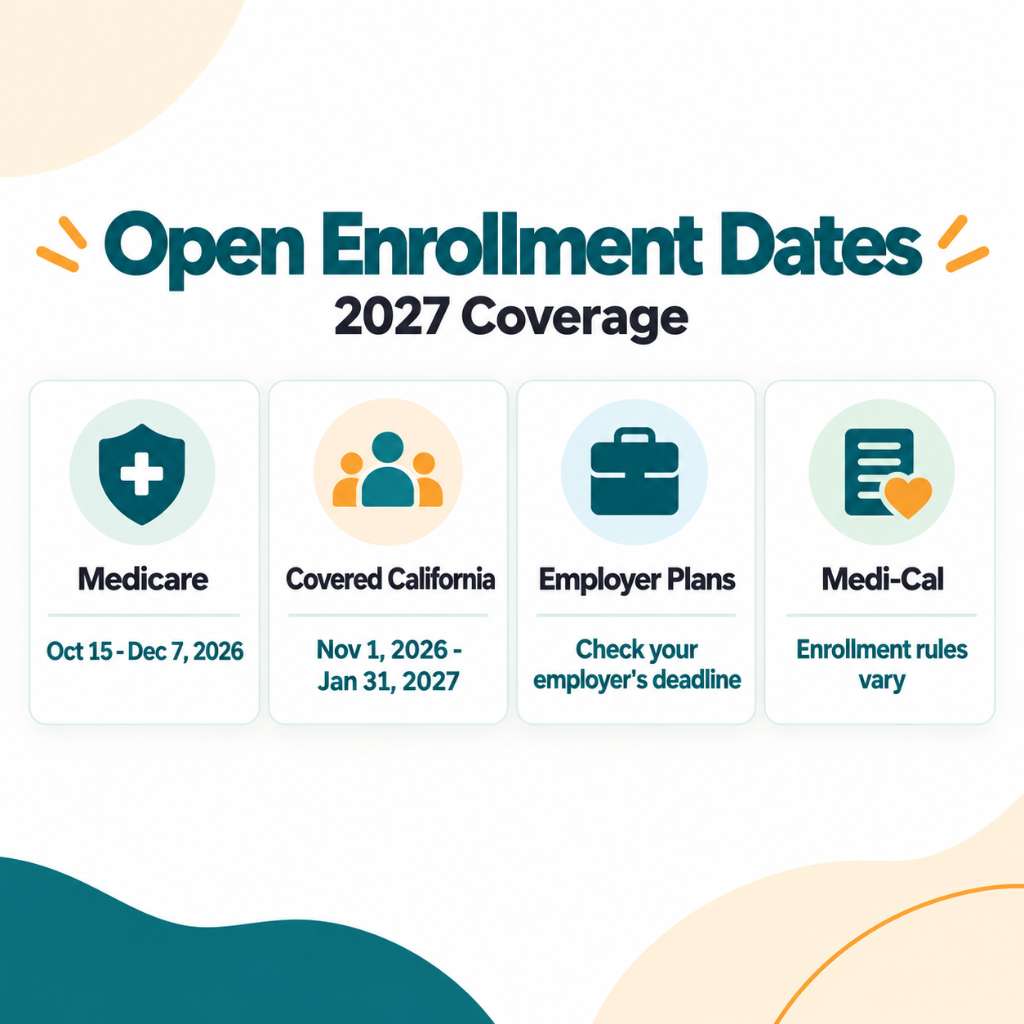
Open Enrollment Dates for 2027 Health Coverage
Different types of health insurance use different enrollment periods. Knowing which dates apply to you is the first part of reviewing your coverage.
Medicare Open Enrollment Runs From October 15 Through December 7
Medicare Open Enrollment begins October 15, 2026, and ends December 7, 2026.
During this period, people with Medicare can review their 2027 coverage and make changes to Medicare Advantage and prescription drug coverage. Medicare health and drug plans can change from year to year. Those changes may affect costs, benefits, provider networks, pharmacy networks, and prescription drug coverage.
If you already have a Medicare plan that you want to keep, review the materials your plan sends you for 2027 before deciding. Pay particular attention to the Annual Notice of Change and Evidence of Coverage.
Changes made during Medicare Open Enrollment generally take effect January 1, 2027. You can keep your current Medicare coverage when the plan remains available and continues to meet your needs.
Covered California Open Enrollment Begins November 1
Current Covered California members have been able to review, renew, or switch their coverage for 2027 since October 1, 2026.
General Covered California Open Enrollment begins November 1, 2026, and continues through January 31, 2027.
For coverage beginning January 1, enrollment must be completed by December 31.
If you receive coverage through Covered California, review your plan’s provider network, prescription coverage, expected costs, and any authorization requirements connected to your dialysis care before changing plans.
Employer Health Plan Dates Depend on Your Employer
Employer-sponsored insurance plans set their own open enrollment periods. If your employer has started open enrollment, check the deadline provided by your benefits department. Ask for the plan documents you need to compare your current coverage with the options available for 2027.
Your premium, deductible, copays, coinsurance, provider network, prescription coverage, and authorization requirements can all affect what you pay and how your dialysis care is covered.
Medi-Cal Uses a Different Enrollment Process
Medi-Cal has its own enrollment and managed-care process. In San Diego County, your available Medi-Cal health plans depend on your eligibility and circumstances. Medi-Cal Health Care Options handles enrollment and plan changes for people who have plan choices.
If you have both Medicare and Medi-Cal, your coverage can become more complicated because the two programs may interact with each other. Review your specific situation before changing either part of your coverage.

Why Open Enrollment Can Feel Overwhelming When You Need Dialysis
Health insurance is complicated before dialysis enters the picture. Once you need dialysis though, one insurance decision can touch several parts of your care at the same time.
You may need to check whether your plan includes your dialysis provider, your nephrologist, your pharmacy, medications used as part of your treatment, specialists, hospital systems, and transplant providers if you are pursuing kidney transplantation.
Then there are the financial questions.
- What is your deductible?
- What will you pay in coinsurance?
- Does the plan require referrals?
- Will you need prior authorization?
- Are your prescriptions covered?
- Will the doctors and facilities you already use remain in the network?
- If you are currently on home dialysis or considering home dialysis, there may be another question sitting underneath all of them.
- Can I afford to do this treatment at home?
Those questions can become even more difficult when you are helping a spouse, parent, or another person you care about. You may be comparing health plans while also managing appointments, medications, work, transportation, and the emotional impact of dialysis itself.
You need enough information to understand what a coverage change could mean before you make it.
Can Your Insurance Make Home Dialysis Financially Possible
Those questions can become even more difficult when you are helping a spouse, parent, or another person you care about. You may be comparing health plans while also managing appointments, medications, work, transportation, and the emotional impact of dialysis itself. Your personal cost depends on your insurance benefits and the rules of your plan. Depending on your plan, insurance coverage can include treatment, training, equipment, supplies, medications, laboratory services, and other components of dialysis care.
For people with Original Medicare who qualify for dialysis coverage, Medicare Part B helps cover outpatient dialysis received at home, home dialysis training, home dialysis equipment and supplies, certain home support services, many dialysis-related medications, and laboratory services.
Under Original Medicare, Part B deductibles and coinsurance can apply. Medicare Advantage, Medicare Supplement coverage, employer insurance, Medi-Cal, and other coverage can change what you ultimately pay.
Commercial and employer plans have their own benefit structures, networks, deductibles, coinsurance, and authorization requirements.
Reviewing your insurance benefits helps you understand what you may pay for home dialysis.
Reviewing your insurance benefits helps you understand what you may pay for home dialysis.
At Home Dialysis Therapies of San Diego, we have a team who has helped many San Diego dialysis patients understand their insurance options and feel comfortable in being able to afford home dialysis.
Your insurance company makes the final decisions about your benefits, authorization requirements, network participation, coverage, and patient responsibility. We help you identify the questions that need answers before those decisions become problems during your care.

We Work With 18 Contracted Insurance Organizations
At Home Dialysis Therapies of San Diego, we work with a broad range of insurance companies, health plans, and medical groups.
Our current contracted list includes these 18 organizations:
- Aetna
- Blue Cross
- Blue Shield
- Champion Health Plan
- Cigna
- Community Health Group
- Health Net
- Kaiser
- Molina
- Optum Health
- Scripps Health Plan
- Scripps Employee Plan
- Sharp Community Medical Group
- Sharp Health Plan
- Sharp Rees-Stealy
- Tri-West
- United Healthcare
- UCSD
If you have Medicare and would like help comparing your coverage options, you can also contact the Health Insurance Counseling and Advocacy Program (HICAP). HICAP provides free, unbiased Medicare counseling through Elder Law & Advocacy in San Diego County. Their counselors help you compare Medicare Advantage plans, prescription drug coverage, Medicare Supplement plans, and other Medicare benefits. Call (858) 565-8772 or visit Elder Law & Advocacy’s Medicare counseling page. Our social workers can also help you identify questions about how your coverage affects your dialysis care.
If your insurer is not listed, contact us. Our team will work with your insurer to determine whether home dialysis with us can be arranged. Insurance companies can offer several different products and plan designs. Your exact coverage, network status, authorization requirements, benefits, and financial responsibility need to be checked for the specific plan you are considering.
If you are comparing plans during open enrollment, contact our staff at any of our three locations and we can help you get your insurance questions to the appropriate member of our team before you make a change.

How an Insurance Change Can Affect Your Kidney Transplant Plans
If you are being evaluated for a kidney transplant or are already on the transplant waiting list, your transplant care should be part of your open enrollment review.
Your health insurance can affect which transplant centers, hospitals, and specialists are covered under your plan. If you are considering a Medicare Advantage plan, Medicare specifically recommends checking that the doctors, other healthcare providers, and hospitals involved in your transplant care are in the plan’s network and reviewing any prior authorization requirements before you enroll.
Insurance coverage can also affect where you complete your transplant evaluation and which transplant centers are good options for you.
Your place in the national kidney allocation system is based on transplant and medical factors such as waiting time, compatibility, pediatric status, prior living donation, distance from the donor hospital, and expected survival benefit. Your transplant center determines your candidacy and manages your waiting-list status.
If you are pursuing kidney transplantation, tell your transplant center about an insurance change and ask what needs to be verified before your new coverage begins. Our social workers also work with patients throughout the transplant process and can help you stay organized around the steps your transplant program requires.
Home Dialysis Therapies of San Diego Is Contracted With Kaiser
If you have Kaiser, Home Dialysis Therapies of San Diego is a contracted provider. This is particularly important to know if you are interested in home dialysis and assumed your insurance would prevent you from considering HDT.
Your exact Kaiser plan, benefits, referrals, authorization requirements, and financial responsibility still need to be reviewed for your individual coverage. Our team will help you go over any questions you may have and understand what needs to be confirmed before you begin or change your care.
What to Check Before You Change Your Health Plan
Before choosing a plan, check how it covers the different parts of your dialysis care. To help you do so, we have put together a list of questions that we find helpful for patients and caregivers when choosing a plan.
1: Is Your Dialysis Provider in your Plan?
Check the exact dialysis provider and facility you use or are considering.
For people considering Medicare Advantage, Medicare specifically recommends checking whether your dialysis facility participates in the plan’s network.
If you are considering becoming a patient at Home Dialysis Therapies of San Diego, talk to our team about your plan and we can help guide you through the next steps.
2: Is Your Nephrologist in Your Plan?
Your nephrologist plays a central role in your dialysis treatment.
Confirm that your nephrologist participates in the plan you are considering and review any referral or authorization requirements that may apply.
3: Are Your Dialysis Medications Covered?
Review the medications you currently take and any dialysis-related medications that are part of your treatment.
For plans that include prescription drug coverage, check the plan’s current drug list and pharmacy network for 2027.
A medication that remains covered can still move to a different tier or have different authorization requirements.
4: Will You Need New Referrals or Prior Authorization?
Changing plans can change referral and authorization requirements. A new plan may require authorization before certain services are covered or may require referrals through a particular medical group or physician.
Tell us about any changes to your insurance, because a new plan may require referrals or authorizations for your dialysis care.
5: What Will You Pay Out of Pocket?
Review the following costs alongside your monthly premium.
- Your annual deductible
- Copays
- Coinsurance
- Your annual out-of-pocket maximum, if your plan has one
- Prescription drug costs
- Provider network requirements
- Costs for services outside the network
- Any separate coverage rules that affect your dialysis treatment
If a plan appears cheaper, calculate how its full cost structure could affect the care you actually use.

How the Home Dialysis Therapies Team Can Help You
Insurance decisions can become much easier when the questions are separated into manageable pieces. We have an experienced team that works directly with patients and families on insurance and financial concerns.
At our North San Diego, Chula Vista, and Vista clinics, our staff will help you speak with our patient financial coordinator or a social worker about your dialysis coverage, expected costs, and any referrals or authorizations your insurance plan requires.
We will help review your insurance information, identify coverage questions connected to your dialysis care, and determine which issues you may have that you should discuss with your insurance company.
When you’re trying to figure out how you’ll pay for home dialysis, our patient financial coordinator will review your insurance coverage for treatment with us. We will go through your deductible, copays, coinsurance, and anticipated out-of-pocket costs, along with any referrals or prior authorizations your plan requires. Our social workers will also talk with you about financial resources you may qualify for.
We will help review your insurance information, identify coverage questions connected to your dialysis care, and determine which issues you may have that you should discuss with your insurance company.
If You Are Helping a Family Member With Open Enrollment
Caregivers often end up doing a large amount of the work that comes with dialysis care. If you are helping your spouse, parent, or another family member compare health plans, gather the information that will let you evaluate the plans against the care they already receive.
Start with:
- The current insurance card
- The current plan’s Annual Notice of Change if they have Medicare Advantage
- A current medication list
- The name of the nephrologist
- The dialysis provider or facility
- Transplant center information when applicable
- Other specialists involved in care
- Expected deductibles, copays, and coinsurance
- Any referral or authorization information you already have
Write down the questions you cannot answer from the plan documents. Those are the questions to bring to the insurer, Medicare, your employer’s benefits department, Covered California, Medi-Cal Health Care Options, or the HDT team depending on who controls the decision.
If your family member is pursuing a kidney transplant, include their transplant center, transplant doctors, and any current authorization information with the records you gather before comparing plans.
Open Enrollment Questions for Dialysis Patients FAQs
Do I Have to Change My Medicare Plan During Open Enrollment?
You can keep your current Medicare coverage when the plan remains available and continues to meet your needs.
Review the Annual Notice of Change and Evidence of Coverage your plan sends you. Check changes in costs, benefits, provider networks, pharmacy networks, and prescription drug coverage for 2027.
What Should I Check Before Joining a Medicare Advantage Plan if I Am on Dialysis?
Confirm that your dialysis facility and kidney doctor participate in the plan’s network.
If you are pursuing kidney transplantation, check your transplant doctors, hospital, and transplant center as well.
Review prescription drug coverage, authorization requirements, deductibles, copays, coinsurance, and the annual out-of-pocket limit before enrolling.
Does Medi-Cal Use the Same Open Enrollment Dates as Medicare?
Medi-Cal uses a different enrollment and managed-care process.
In San Diego County, Medi-Cal Health Care Options handles managed-care plan selection and changes for people who have plan choices. Your available plans depend on your eligibility and circumstances.
What if My Employer Uses Different Open Enrollment Dates?
Follow the enrollment period provided by your employer.
Ask your benefits department for the plan documents for 2027 and review each option against your dialysis provider, nephrologist, prescriptions, specialists, authorization requirements, deductible, coinsurance, and other costs.
Talk With Our Insurance and Financial Team Before You Change Coverage
You already have enough to deal with when you or someone you love needs dialysis. Insurance should be something you can work through with people who understand how it impacts your ability to afford home dialysis treatment.
At Home Dialysis Therapies of San Diego, our patient financial coordinator, insurance billing staff, social workers, and staff at all three of our locations routinely help patients and families work through insurance and financial questions about their home dialysis care.
At Home Dialysis Therapies of San Diego, our patient financial coordinator, insurance billing staff, social workers, and staff at all three of our locations routinely help patients and families work through insurance and financial questions about their home dialysis care.