

All You Need To Know About
Home Dialysis

Home Dialysis: What It Is And How It Works

Home dialysis is dialysis that takes place in your home instead of a center, using equipment that is prescribed and monitored by your nephrologist. Most people do this as either peritoneal dialysis, which uses the lining of the abdomen, or home hemodialysis, which uses a compact machine and a blood access similar to in-center treatment. The goal is the same in every case: remove fluid and toxins safely and keep you well enough to live your life outside of treatment.

What changes with home dialysis is where and when treatments happen, and how involved you are in the process. Treatments are usually shorter and more frequent than standard in-center hemodialysis, and they are scheduled at times that can better match work, sleep, and family routines. At Home Dialysis Therapies of San Diego, your nephrologist and home dialysis team explain these options, review your medical history and home situation, and help you decide whether a home program is an appropriate choice.

Treatments Done In Your Own Space

Home dialysis uses machines and supplies that are delivered to you and set up according to your treatment plan. You are trained step by step on where to place your equipment, how to keep the area clean, and how to follow the same safe routine every time you treat.

A Schedule Planned With Your Care Team

Peritoneal dialysis and home hemodialysis can often be timed for evenings, early mornings, or overnight, depending on your prescription and home support. Your team works with you to choose a schedule that supports your lab goals while giving you more predictable time for work, family, and rest.

Why Many Patients Choose
Home Dialysis

Why Many Patients Choose Home Dialysis

These statistics represent national averages reported by the United States Renal Data System (USRDS) and other studies, and are intended for educational purposes only.

Higher Transplant Waitlisting
0 X

According to USRDS 2024 Annual Data Report, which found patients choosing home dialysis are more than twice as likely to be registered on the kidney transplant waitlist compared to those receiving in-center care. In 2022, approximately 25% of prevalent home dialysis patients were waitlisted, a critical metric for those whose long-term goal is a transplant.

Treatments Within 2 Hours
0 %

In a study of nursing-home residents receiving more frequent, gentler hemodialysis five times per week, patients reported recovering within two hours after 92 percent of their treatments, even though most were older and medically fragile, suggesting that when dialysis is delivered more often with a slower pace, patients can feel better sooner after treatment. Your own recovery time will depend on your health, dialysis schedule, and care plan.

Growth in Patient Adoption
0 %

According to Advancing American Kidney Health (AAKH) Data, home dialysis is the fastest-growing treatment modality in the U.S.. Between 2012 and 2022, the percentage of new patients choosing to do treatment at home increased by 70%, reflecting a shift toward patient-centered care and the increasing confidence both doctors and patients have in home dialysis.

How Home And In-Center Dialysis Fit
Into Everyday Life

How Home And In-Center Dialysis Fit Into Everyday Life

Schedule And Travel

Home dialysis lets you and your care team build a treatment schedule around your life, often in the early morning or evening, with far fewer trips to a clinic. For most people, that means less time in traffic, fewer missed events, and more control over when treatment happens. In-center dialysis locks you into fixed chair times several days a week, which can dominate your calendar even when you feel well.

Your Role In Treatment

With home dialysis, you and, if needed, a care partner are trained to run treatments, track your numbers, and work directly with your nurse and nephrologist to fine tune your plan. That active role gives many patients a stronger sense of control and helps catch small changes early before they become bigger problems. In-center dialysis keeps you mostly passive in the chair, which can feel safer at first but often leaves people less engaged in their own care.

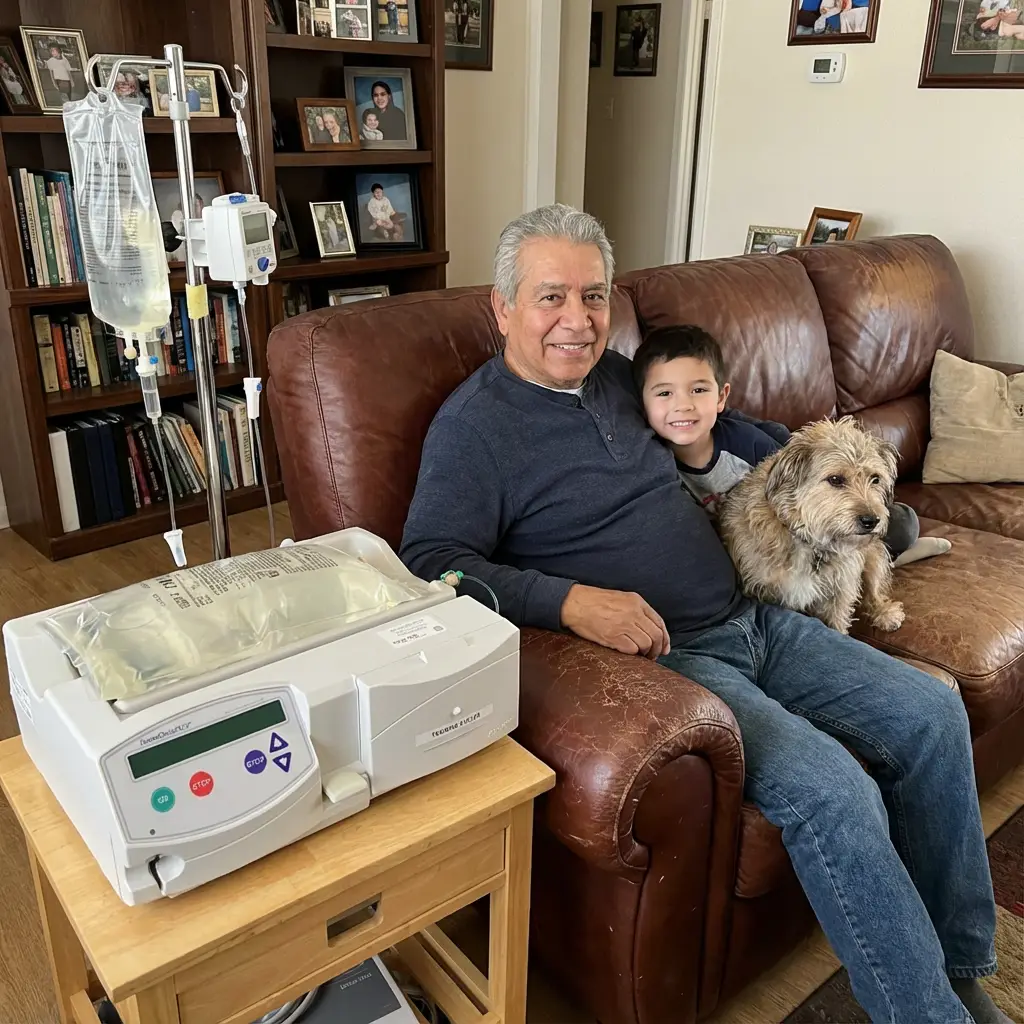
Older man and young boy with their dog sitting beside a Baxter automated peritoneal dialysis machine in a home setting

What Treatment Feels Like

Because home dialysis is usually delivered more gently and more often, many people feel less “washed out” and have steadier energy between treatments than they did on three-times-a-week in-center dialysis. That extra energy makes it easier to stay active, walk, stretch, and follow the fitness plans that protect your heart and muscles. In-center treatments are longer and more intense, and a lot of patients describe dialysis days as “lost days” because of fatigue and cramps afterward.

Home, Work, And Social Support

Home dialysis happens in your own space, which makes it far easier to keep working, show up for family routines, and maintain the parts of life that matter to you. Patients can dialyze while watching TV, talking with family, or resting on their own couch, then step right back into their day without a long trip home from the unit. In-center dialysis means regular hours away from home and work, plus recovery time afterward, which can make schedules and income much harder to manage.

Know Your Rights As A
Dialysis Patient

Know Your Rights As A Dialysis Patient

In the United States, dialysis patients have legal protections that cover how treatment choices are explained, how decisions are made, and how complaints are handled. The points below are meant to help you ask clearer questions and recognize when you are not getting full information about home therapies, but they are not a substitute for legal advice. If you believe your rights have been ignored or are unsure what to do next, you can talk with your dialysis social worker, contact your ESRD Network, or speak with a lawyer who understands healthcare law in your state.

Your Right To Learn About Every Dialysis Option

Patients in Medicare-certified dialysis clinics have the right to be informed about all treatment modalities and settings, including transplant, home hemodialysis, all forms of peritoneal dialysis, and in-center hemodialysis, even if the clinic does not offer every option. Clinics are also expected to provide resource information and alternative scheduling options for working patients.

Your Right To Help Choose, Refuse, Or Change Your Treatment

You have the right to be informed, to participate in, and to accept or refuse different aspects of your dialysis care, including the type of dialysis you do and where you do it. If you feel pressured toward in-center treatment or are not being offered home options, you can ask for a full options discussion, a second opinion, or a referral to a program that supports home therapies.

Your Right To Understand Your Health And See Your Records

You have the right to be told your medical status in a way you can understand, and to see key information such as lab results, treatment notes, and your plan of care. This includes understanding whether you are medically appropriate for home dialysis and what support you would need to do it safely.

Your Right To Speak Up Without Punishment

You have the right to be informed about the clinic’s complaint process, to file complaints with the dialysis facility, ESRD Network, or state agency, and to do so without reprisal or denial of services. If you believe your options were not explained or you were steered away from home dialysis, you can raise that concern and ask for it to be reviewed.

Your Home Dialysis Options
At HDT

Your Home Dialysis Options At HDT

At Home Dialysis Therapies of San Diego, our focus is on home based treatments. Working with your nephrologist, you can choose between peritoneal dialysis and home hemodialysis, with schedules that can be tailored around sleep, work, and family life. Below is a brief overview of the main options we offer so you can start to see which ones might fit your situation and questions to bring to your care team.

Automated Peritoneal Dialysis (APD)

APD uses a small machine, often at night, to cycle dialysis fluid in and out of your abdomen while you sleep. Many patients like that most of their treatment happens overnight, leaving the day free for work, school, and daily routines. You and your care partner receive training at HDT, and our team follows your labs and symptoms closely so your prescription can be adjusted as your needs change.

Continuous Ambulatory Peritoneal Dialysis (CAPD)

CAPD is a manual form of peritoneal dialysis that uses gravity instead of a machine. You perform a series of fluid exchanges during the day, usually in clean spaces at home, work, or school, using portable supplies. This option can work well for people who prefer not to sleep connected to a cycler and who want a steady, gentle treatment that can travel with them.

Home Hemodialysis (HHD)

Home hemodialysis uses a compact hemodialysis machine in your home, often with shorter, more frequent treatments than standard in center dialysis. Many people report steadier energy and fewer “crash” days when treatments are paced this way. HDT provides structured training for you and your care partner, helps prepare your home, and schedules regular clinic visits to review your labs, blood pressure, and overall progress.

Nocturnal Home Hemodialysis (NHD)

Nocturnal home hemodialysis is done overnight while you sleep, using longer, slower treatments that can be easier on the heart and fluid balance for many patients. This schedule frees most of the daytime for work, family, and activities. Our team works with you to decide whether nocturnal treatments are appropriate and how to set up a safe treatment space at home.

Questions To Ask Your Doctor About Home Dialysis

If you think home dialysis might fit your life, the next step is a clear, specific conversation with your kidney doctor. These questions can help you understand all your choices, how your clinic views home therapies, and what support you would receive if you decide to dialyze at home.

Can You Explain All Of My Dialysis Options, Including Home Therapies?

Ask for a side-by-side explanation of in-center hemodialysis, peritoneal dialysis (PD), and home hemodialysis (HHD), including nocturnal schedules. Ask how often each treatment is done, where it takes place, what kind of access is used, and how it might affect your daily routine. You should leave the visit with a clear picture of what life could look like on each option, not just the one you are on today.

How Many Of Your Patients Are On Home Dialysis?

This question helps you see how experienced your doctor and clinic are with home therapies. If only a small number of patients are doing PD or HHD, ask why. Are there medical reasons, or is it more about staff training, space, or equipment? Clinics that routinely support home dialysis usually have systems for training, follow-up, and troubleshooting that make the transition smoother for patients and care partners.

Am I A Candidate For Home Dialysis, And What Would Need To Change?

Ask directly whether your doctor thinks you are medically appropriate for home dialysis and why. If the answer is no or “not right now,” ask which factors are driving that decision, such as blood pressure, support at home, or mobility. Then ask what steps could move you toward being a candidate, like improving other health conditions, arranging a care partner, or making safety changes at home.

What Training And Support Would I Receive If I Choose Home Dialysis?

Good home programs provide structured, hands-on training for you and your care partner, plus ongoing access to nurses, dietitians, and social workers. Ask how long training usually takes, who teaches it, and what kind of help is available after you go home, including after-hours support. You can also ask how often you would visit the clinic in person and what happens if you run into problems with your access or equipment.

How Do Your Home Patients Do Compared With In-Center Patients?

Instead of a general opinion, ask for specifics. You can ask how home patients’ energy, blood pressure, and symptom control compare with in-center patients in the same clinic. It is reasonable to ask about hospitalization patterns and how often home patients are evaluated for transplant. The goal is not a guarantee, but a realistic sense of how home dialysis has worked for people like you in this practice.

If I Want Home Dialysis, How Can I Move Forward From Here?

End the visit with a concrete next step. If your clinic offers home dialysis, ask how to schedule an options class or one-on-one education visit. If it does not, ask for a referral to a program that specializes in PD or HHD and make sure that referral is actually sent. You can also ask for written information to review at home so you can bring follow-up questions to your next appointment.

Frequently Asked Questions

Peritoneal dialysis (PD) uses the lining of your abdomen as a filter. Fluid goes in and out of your belly through a soft catheter, either with a machine at night (APD) or by manual daytime exchanges (CAPD). Home hemodialysis (HHD) uses a compact machine and your bloodstream, similar to in-center dialysis, but treatments are usually shorter and more frequent. Some people prefer PD because it does not involve needles; others prefer HHD because it feels closer to what they already know from in-center care. At HDT, you can learn about both options in detail and decide which fits your health, home, and daily routine best.

For many patients, home dialysis is at least as safe as in-center dialysis when it is set up and monitored correctly. In some studies, people on well-supported home therapies have had better blood pressure control, fewer large fluid shifts, and more stable symptoms. Safety depends on good training, clean technique, reliable equipment, and regular follow-up with your care team. Your nurse and nephrologist will review your medical history, home situation, and support system to decide whether PD or HHD is a reasonable option for you.

In the United States, Medicare and most commercial insurance plans cover home dialysis, including PD and HHD, when it is ordered by your nephrologist. The structure of copays, deductibles, and supply coverage can vary by plan, so it is important to talk with your social worker or insurance case manager before you switch. They can help you understand how training, equipment, home modifications, and medications are billed, and what your likely out-of-pocket costs will be compared with in-center care.

Many patients on home therapies are able to travel, but the planning looks different for PD and HHD. PD patients often travel with supplies shipped ahead or packed in checked luggage, and may arrange space in hotels or family homes for exchanges. HHD travel may involve coordinating with a partner clinic or using in-center treatments at your destination. HDT provides travel planning guidance, checklists, and support for prescriptions and supply shipments so you are not trying to organize everything alone. If you are thinking about a trip, start that conversation early with your care team.

Some home dialysis options require a care partner, while others can sometimes be done independently. Many HHD programs expect a partner who can help with machine setup, needle placement, and emergency procedures. PD can sometimes be done alone if you can safely handle the equipment and follow instructions, though some patients use assisted PD if they need help. Your team at HDT will review what is required for each therapy, look at your support network, and talk through realistic ways to share responsibilities.

Choosing home dialysis is a personal decision that depends on your health, your living space, and what you want your life to look like on treatment. Home therapies may be worth exploring if you want more control over your schedule, would value shorter recovery times after treatments, or prefer care in a familiar environment. They may be less suitable if you have severe medical or mobility issues that make it hard to manage equipment safely, or if your living situation is very unstable. The best way to decide is to combine a thorough options education visit, an honest talk with your nephrologist, and a practical look at your home and support system.

Exterior sign marking the entrance to Home Dialysis Therapies of San Diego's north clinic in Suite 250
Scroll to Top